
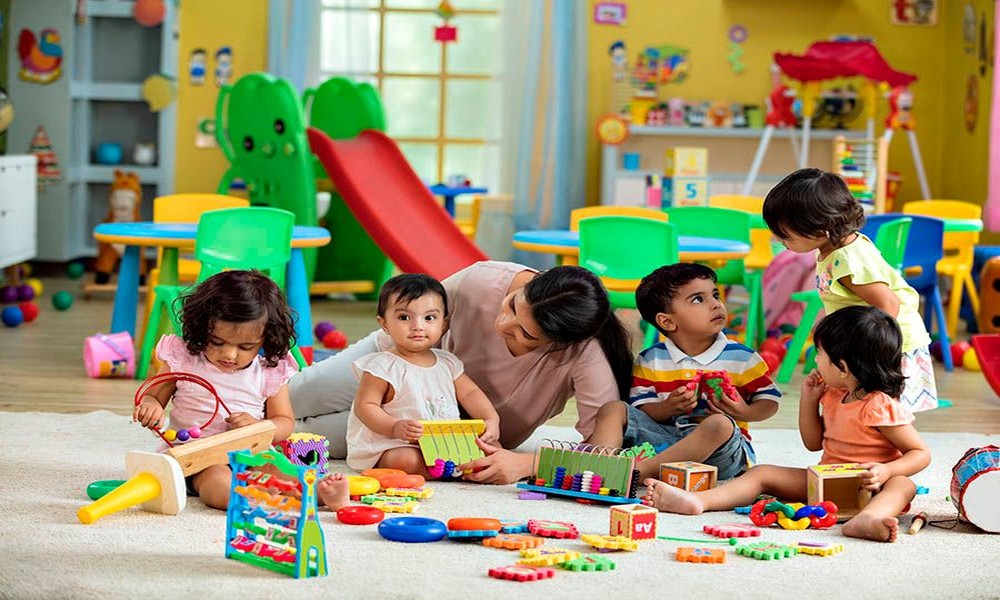

Many parents hesitate before starting.
They are concerned to get things done “right”. They believe they have to have perfect plans, perfect materials, and perfect timing.
But the reality is kiddos especially young ones do not need perfection.
Like the fawns, they require some attention and then being left to their own devices, but unlike the fawns, there are so many of them that they prefer company. And that is what homeschooling preschool gives you.
Learning That Feels Like Play
Preschoolers learn by moving, not sitting still.
They learn through experience, through tangible processes, through motion, and through inquiry.
Which is why homeschooling preschool being such a perfect fit. This learning gets mixed into everyday life.
Walking becomes a science class. A language lesson from a story. A game becomes a math lesson.
It’s natural. It’s simple. And it works.
How to Set Up an Environment for Learning at Home?
No need of a different classroom.
A small, lightweight space is more than enough.
Keep it welcoming and user friendly −
- A shelf with books and toys
- Basic art supplies
- A comfortable spot for reading
This arrangement is stimulating for the child but does not take the independence too far.
Majesty of Routine Without Stress
Children feel secure with routine.
However, that does not translate into rigid timetables.
You can think of a rhythm, not a schedule, when it comes to homeschooling preschool.
Start with Connection
Start your day by having conversation, reading, or singing together.
This builds comfort and focus.
Add Short Activities
Keep learning sessions brief.
10-15 minutes is typically sufficient; young children have short attention spans.
Leave Room for Free Play
This means play without a directed objective, just as important as related learning.
It encourages creative thinking and self-directed problem solving in children.
What Should You Actually Teach?
This is a common question.
The solution is far less complicated than you might assume.
Focus on basics:
- Letters and sounds
- Numbers and counting
- Colors and shapes
- Simple social skills
These concepts can be introduced through (playful repetition) during preschool homeschooling.
Following Your Child’s Curiosity
Interest is the best teacher for children.
If your child loves animals, create lessons based on that. Use it to teach shapes and colors if they are fond of drawing.
The biggest pro of homeschooling preschool is this flexibility.
It makes learning feel more natural than forced.
What to Do When it All Goes Wrong?
Some days will feel messy.
Your child may lose interest. Plans may not work.
That’s okay.
The path through early learning is not a straight line. All that counts are to keep showing up and trying.
Social Skills Still Matter
Social interaction is a more prevalent fear.
You can support this by:
- Arranging playdates
- Visiting parks
- Joining local activity groups
Such experiences aid in developing their confidence and communication skills.
The Hidden Benefit for Parents
Kids are not the only things that have on a growth spurt.
The parents also get immersed into their child learning journey.
You know their talents, hobbies, and nature better.
Homeschool preschool achieves homeschooling outcomes that are powerful.
Final Thoughts
Transparency and simplicity should be the biggest challenge of early education.
Beauty in simplicity is an exquisite teacher.
When it comes to homeschooling preschool, you make a learning environment that feels safe, fun, and purposeful.
And those small daily steps? They set the stage for everything else that follows.
Tiny Steps, Big Growth: A Real-Life Guide to Homeschooling Preschool
