
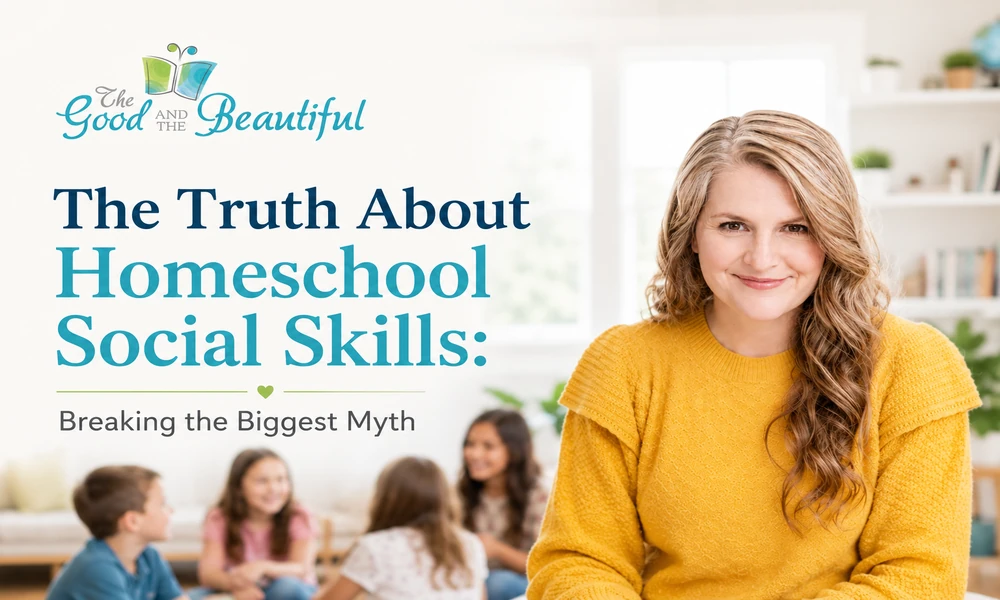

One of the biggest myths about homeschooling is that your child will not get enough social experience. Homeschool social skills generally evolve from a large spectrum of non-school based interactions which are not forced upon young people in the classroom. Social development is about learning to communicate, collaborate, and relationships, and that can be experienced in many different environments.
By designing experiences, they can help their homeschooled kids develop people skills, you know, those skills that ensure you won’t struggle in school/work/life.
Social Skills Are More Than They Seem
The idea being that children are not learning social skills just by sitting in a classroom with other children. They develop through conversations with neighbors, teamwork in sports, participation in clubs, and volunteer activities, family members − the whole human circle we inhabit.
The variety of personalities, ages, and circumstances prepare children to be versatile communicators.
How to Develop a Homeschool Social Skills (in Practical Ways!)?
Social learning can often be a part of organic life for homeschool families. Some effective opportunities include:
- Joining local community programs.
- Participating in youth organizations.
- Engaging in music, dance, or some form of art class.
- Visiting museums and educational events.
- Co-op’s classes with other homeschool families.
These activities promote cooperation and responsibility, as well as respectful communication, while making learning fun.
Quality Matters More Than Quantity
We develop relationships with people through the regular positive interactions. Homeschooled youngsters have the freedom of giving time to really forming genuine relationships versus simply interacting together during classes.
They also learn to communicate with adults, mentors, coaches, as well as younger children which means that they become acclimatized in a variety of social tasks.
Preparing Children for the Future
Good communication skills are helpful at every stage of life. In the same way that you have to study harder for college admissions tests, nail interviews when starting your career, and engage in community activities that develop relationships, confident interaction matters just as much (if not more).
Homeschool social skills from unique experiences prepare children for changing circumstances, working together to solve problems, and communicating effectively.
Final Thoughts
With that information in hand, the notion of homeschooling being a barrier to social development fails to align with today’s homeschool experience. Through careful planning and consistently participating in community activities, you can develop homeschool social skills that are tangible and long-lasting. Parents also make their kids confident, respectful, and well-prepared for all the opportunities and challenges going forward by encouraging real world communication, teamwork, and relationship-building.
