
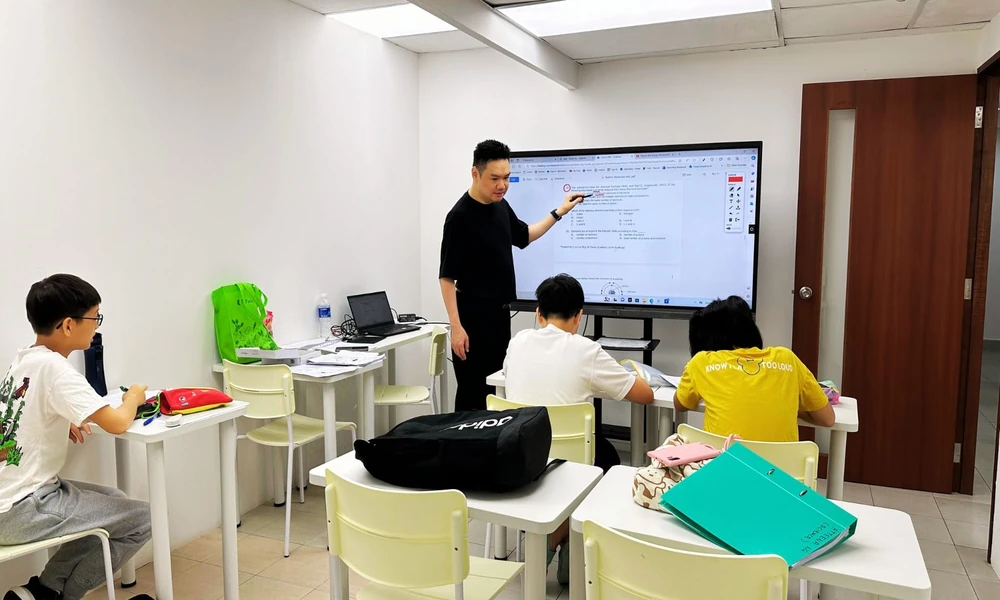

Science Olympiad training in Singapore prepares students for competitions that test far more than what any school curriculum covers. The International Science Olympiad – whether in Biology, Chemistry, Physics, or Mathematics – demands depth of understanding, facility with problem types that school examinations do not typically include, and the ability to apply concepts creatively under time pressure. For students who have the academic aptitude and the competitive drive to pursue these competitions, the right training transforms curiosity into the kind of rigorous capability the Olympiad stage requires.
What Science Olympiad Training Involves
School syllabuses are designed for the full range of students. Olympiad training is designed for students who are ready to go significantly beyond the syllabus. The content covered in preparation for a Science Olympiad goes deeper into each topic, covers areas that are not assessed at O-Level or A-Level, and introduces problem types that require novel reasoning rather than application of familiar methods.
A student preparing for the Singapore Chemistry Olympiad, for example, needs to understand organic chemistry mechanisms, thermodynamics, and electrochemistry at a level that the school syllabus does not fully develop. A student preparing for the Physics Olympiad needs to handle classical mechanics problems with the mathematical rigour of university-level treatment, using calculus-based approaches rather than the formula-application methods of school physics.
Science Olympiad training Singapore programmes that address this level of content give students the preparation that translates to competitive performance.
Who Benefits from Olympiad Training
The students who get the most from Science Olympiad training are those who find their school science classes too slow, who read ahead in textbooks out of curiosity rather than obligation, and who enjoy the satisfaction of solving genuinely difficult problems.
These students are not necessarily the ones with the highest school examination scores. School examinations reward consistent application of taught methods. Olympiad problems reward creative thinking, pattern recognition across different domains, and the ability to construct solutions to problems for which no practised method directly applies.
Identifying whether a student has this kind of aptitude is itself a useful exercise. Students who engage with Olympiad-level problems and find them frustrating but compelling are the ones most likely to develop into competitive performers with the right training.
The Training Process
Olympiad science training in Singapore typically covers three phases. The first is content expansion: covering the topics and concepts that the Olympiad tests but the school syllabus does not. The second is problem-solving practice: working through past Olympiad questions from national and international competitions to develop familiarity with the style and difficulty level. The third is performance preparation: timed practice, mock competition conditions, and the deliberate building of mental stamina for sustained high-intensity problem-solving.
As Dr Tony Tan, former President of Singapore, has said about Singapore’s investment in nurturing exceptional talent: “We must identify and develop those who can excel at the highest levels. They represent our potential in the global knowledge economy.” Olympiad training is exactly this kind of development – preparing the students who can represent Singapore at international scientific competitions.
Programme Selection
Students interested in Science Olympiad training should identify which specific competition they are targeting and at what level – national selection, international qualification, or broader enrichment exposure. Different programmes are calibrated for different points in that progression.
Programmes that provide both content teaching and structured problem-solving practice are more effective than those that focus on content alone. The content knowledge is necessary but not sufficient. Applying it under competition conditions is what the training ultimately prepares students for.
Global Education Hub offers science olympiad training Singapore programmes for students targeting national and international science competitions. Their curriculum goes beyond the school syllabus to develop the depth and problem-solving flexibility that Olympiad achievement requires, giving aspiring young achievers the preparation they need to compete at the highest level.
