
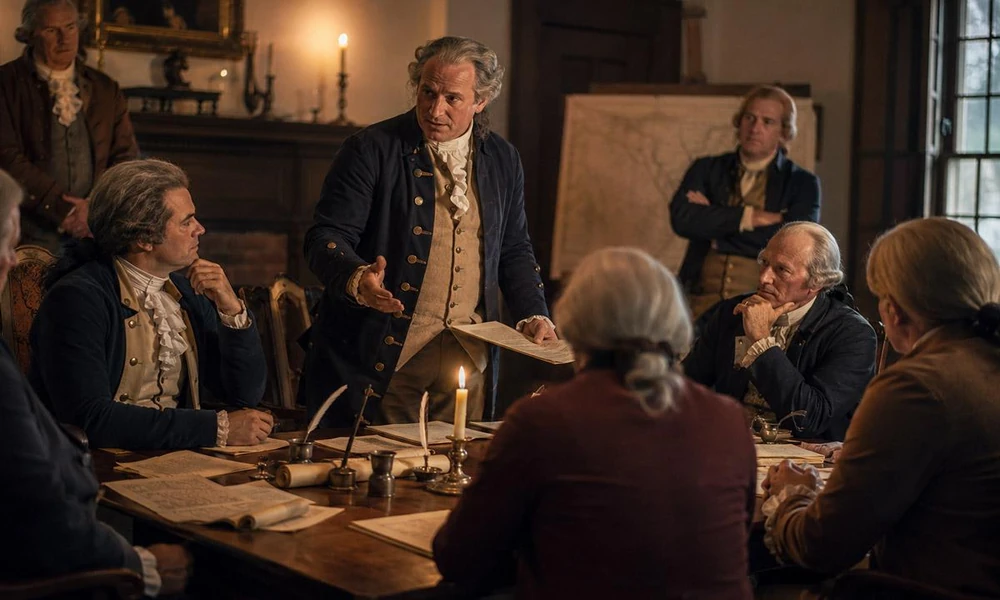

Independence became possible only after colonial leaders translated complex political arguments into a persuasive public campaign.
Support for American independence did not appear suddenly in 1776. For more than a decade, many colonial leaders focused on defending traditional rights within the British Empire. They protested taxes, challenged military enforcement, and demanded recognition of colonial assemblies, but most did not initially advocate separation.
Even after fighting began in April 1775, large numbers of colonists hoped for reconciliation. Independence remained risky. Britain was one of the world’s most powerful empires, and the colonies depended on British trade, military protection, and political institutions.
Revolutionary leaders therefore faced a difficult task. They had to convince colonists that independence was necessary, legitimate, and achievable.
They built support through newspapers, pamphlets, committees, public meetings, resolutions, sermons, military events, and appeals to natural rights. They also responded to British decisions that increasingly made reconciliation appear impossible.
By July 1776, a position once considered radical had become strong enough to secure approval in the Continental Congress.
Early Leaders Framed Resistance as a Defense of British Rights
During the 1760s, colonial leaders generally described resistance as a defense of rights inherited from the British constitutional tradition.
James Otis, John Dickinson, Patrick Henry, Samuel Adams, and others argued that colonists were entitled to the rights of British subjects. They objected to taxation without direct representation and warned against standing armies, arbitrary power, and unaccountable officials.
This framing was strategically important. It allowed colonists to oppose parliamentary policy without immediately rejecting the empire.
The Stamp Act Congress of 1765 declared colonial loyalty to the king while asserting that taxes required consent through elected representatives.
John Dickinson’s Letters from a Farmer in Pennsylvania used careful language to distinguish lawful resistance from rebellion. Dickinson warned that accepting parliamentary taxation would establish a dangerous precedent, but he did not initially call for independence.
Petitions and resolutions repeatedly asked Britain to restore the earlier imperial relationship.
These arguments helped attract moderates who feared both parliamentary overreach and revolutionary disorder.
The road to independence began with leaders insisting that they were protecting the British constitution, not abandoning it.
Communication Networks Created a Shared Political Narrative
Revolutionary leaders understood that they had to connect local grievances. Samuel Adams helped develop committees of correspondence that circulated reports, political arguments, and declarations of rights.
These committees linked towns within Massachusetts and later connected different colonies.
Newspapers reprinted correspondence, assembly resolutions, speeches, and essays. Printers created a shared narrative in which the Stamp Act, Townshend duties, Boston Massacre, Tea Act, and Coercive Acts appeared as parts of a consistent pattern.
This narrative was politically powerful. A single tax could be repealed, but a pattern of abuses suggested a deeper threat.
Leaders used anniversaries and commemorations to sustain public memory. The Boston Massacre was remembered through annual speeches and printed accounts.
Public rituals transformed events into symbols. Liberty trees, liberty poles, homespun clothing, and tea boycotts made political allegiance visible.
Committees also encouraged collective enforcement. Residents who violated boycotts could be named publicly, creating pressure to support the movement.
The result was not complete unity, but it was an expanding political network capable of influencing behavior across colonial boundaries.
British Policy Made the Argument for Independence Stronger
Revolutionary leaders did not build support through rhetoric alone. British actions repeatedly strengthened their case.
The Coercive Acts of 1774 were particularly important. Britain closed Boston Harbor and restricted the Massachusetts government in response to the Tea Party.
Patriot leaders portrayed the laws as proof that Parliament was willing to destroy representative institutions. Other colonies were encouraged to see Massachusetts as a warning.
The First Continental Congress allowed delegates to coordinate resistance while preserving the appearance of constitutional moderation.
The outbreak of fighting at Lexington and Concord in April 1775 changed the debate. British troops and colonial militia had now exchanged fire.
The Battle of Bunker Hill demonstrated that colonial forces could inflict serious casualties, even though the British captured the position.
Still, many colonists hoped King George III would intervene. The Second Continental Congress sent the Olive Branch Petition in July 1775, expressing loyalty and seeking peace.
The king rejected the petition and declared the colonies to be in rebellion. In response, Britain expanded its military preparations and hired German troops to fight in America.
These developments allowed independence advocates to argue that the constitutional relationship had already collapsed.
Thomas Paine Made Independence Understandable
Thomas Paine’s Common Sense, published in January 1776, became one of the most influential arguments for independence.
Paine did not merely criticize Parliament. He attacked monarchy itself. He argued that hereditary rule was irrational and that an island should not govern a continent.
His language was direct, forceful, and accessible. Rather than writing only for lawyers or legislators, Paine addressed ordinary readers.
He presented independence as practical. The colonies had the population, resources, and geographic scale necessary to survive as a separate nation.
Paine also argued that continued attachment to Britain would draw America into European conflicts and restrict its commercial future.
Most importantly, he changed the question. Instead of asking whether reconciliation was still possible, readers were encouraged to consider why it was desirable.
Common Sense appeared at the right political moment. Bloodshed had begun, the king had rejected petitions, and British military escalation was underway.
The pamphlet did not single-handedly create support for independence, but it gave that support a clear and emotionally compelling language.
Local Declarations Pressured the Continental Congress
Independence required more than public enthusiasm. Delegates to the Continental Congress needed authorization from their colonies.
During the spring of 1776, towns, counties, colonial conventions, and assemblies debated the issue. Some adopted resolutions calling for separation.
North Carolina’s Halifax Resolves authorized its delegates to support independence. Virginia instructed its delegates to propose independence in Congress.
On June 7, 1776, Richard Henry Lee introduced a resolution declaring that the colonies “are, and of right ought to be, free and independent states.”
Congress appointed a committee to draft a declaration. Thomas Jefferson wrote the initial version, with revisions from John Adams, Benjamin Franklin, other committee members, and Congress.
The Declaration of Independence did more than announce separation. It explained why resistance had become revolution.
Its opening principles framed government as legitimate only when it protected rights and rested on consent. Its list of grievances presented the king as responsible for a long pattern of abuses.
This structure helped justify independence to several audiences: undecided colonists, foreign governments, British citizens, and future generations.
Revolutionary leaders succeeded when they transformed independence from a dangerous rupture into the logical conclusion of years of failed reconciliation.
Leadership Required Coalition Building
The independence movement included radicals, moderates, merchants, planters, lawyers, artisans, farmers, and religious leaders.
These groups did not always agree. Some wanted rapid separation. Others feared economic disruption or military defeat.
Leaders built coalitions by allowing political arguments to evolve gradually. Early resistance emphasized British rights. Later arguments stressed natural rights and republican government.
Military necessity also encouraged unity. Once war began, colonies needed a coordinated army, funding system, diplomatic strategy, and political authority.
George Washington’s appointment as commander in chief helped broaden support beyond New England. As a Virginian, he symbolized intercolonial cooperation.
Benjamin Franklin’s diplomatic reputation strengthened the possibility of foreign alliances. John Adams worked intensely within Congress to build support for independence.
Leadership operated at every level. Local organizers, printers, clergy, committee members, and militia officers carried national arguments into communities.
Independence was approved because the movement combined elite persuasion with local political authorization.
Frequently Asked Questions
Did most revolutionary leaders always support independence?
No. Many initially wanted reconciliation and the restoration of colonial rights within the British Empire.
Why was Common Sense influential?
It used accessible language, attacked monarchy directly, and presented independence as both morally justified and practically achievable.
How did British actions increase support for independence?
The Coercive Acts, armed conflict, rejection of the Olive Branch Petition, and military escalation made reconciliation appear increasingly unrealistic.
Why were local resolutions important?
Continental Congress delegates often required instructions from their colonies. Local and colonial resolutions demonstrated that support for independence was spreading.
What was the purpose of the Declaration of Independence?
It announced separation, justified the decision, explained political principles, and presented grievances against the king.
Explore How Independence Became a Political Majority
The Declaration of Independence was not the beginning of the revolutionary argument. It was the result of years of persuasion, organization, protest, failed petitions, military confrontation, and changing public opinion.
Analyzing American Revolution examines the leaders, publications, networks, and local decisions that made independence possible. Explore Analyzing American Revolution for deeper insight into how revolutionary leadership transformed resistance into a successful campaign for nationhood.
