
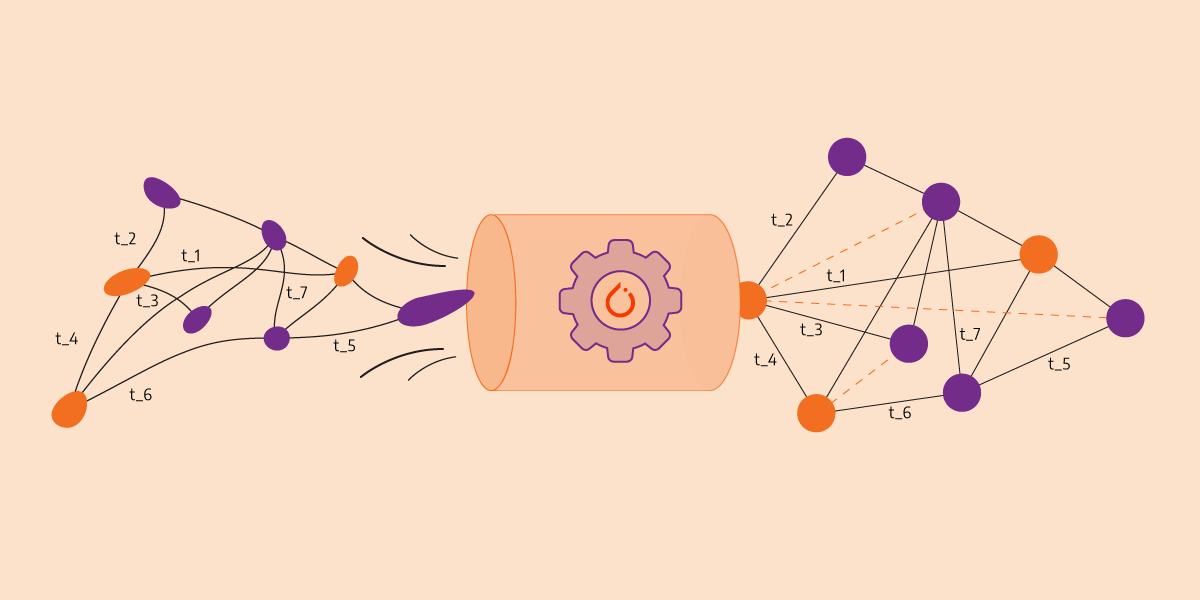

In the fast-evolving landscape of Artificial Intelligence (AI), one emerging technology has steadily been grabbing the attention of researchers, developers, and data scientists alike—Graph Neural Networks (GNNs). While traditional neural networks have powered most of today’s impressive AI applications—from image recognition to natural language processing—GNNs introduce a paradigm shift that promises to push the boundaries further. This innovation is an exciting opportunity for aspirants and professionals to upscale and specialise in places like Marathahalli, a known tech hub in Bangalore. If you are considering stepping into advanced AI, enrolling in a Data Science Course might be your smartest career decision.
Understanding the Power of Graphs
At its core, a graph is a data structure that represents relationships. Think of social networks, where people are nodes and friendships are edges. Or supply chains, where entities are linked through transportation routes. Traditional neural networks struggle to understand such non-Euclidean data formats. GNNs, however, are explicitly designed to operate on graphs, allowing AI systems to effectively model relational data and extract meaning from the connections between elements.
This ability to learn from structured and unstructured relationships opens up a vast arena of applications—from fraud detection in financial systems to personalised content recommendations on e-commerce platforms.
Why are GNNs revolutionising AI?
1. They Model Relationships, Not Just Data
Unlike convolutional neural networks (CNNs) or recurrent neural networks (RNNs), which work best with grid-like data (images or time series), GNNs can interpret arbitrary structures. GNNs can analyse social graphs, chemical compounds, or logistics network interactions. In short, where data relationships are more critical than individual data points, GNNs outperform traditional methods.
2. Powerful in Recommendation Engines
One of the most common uses of GNNs today is in building smarter recommendation systems. Platforms like Pinterest, Alibaba, and Twitter are leveraging GNNs to offer highly personalised content by understanding user preferences in the context of social and behavioural graphs. Businesses in Marathahalli, especially startups looking to refine their product recommendations, can benefit from adopting GNN frameworks early.
3. Transforming Drug Discovery and Healthcare
Graph-based representations are natural in biological data. Molecules can be considered graphs where atoms are nodes and bonds are edges. GNNs can model the properties of these molecules with greater accuracy, making them invaluable in drug discovery. Healthcare startups and research labs around Bangalore are already exploring how GNNs can expedite the path to finding cures for complex diseases.
4. Boosting Cybersecurity and Fraud Detection
Graph-based anomaly detection helps identify suspicious activities in transaction networks or user behaviour. GNNs allow these systems to look beyond individual actions and analyse how data points interact, making spotting coordinated fraud, insider threats, and cyberattacks easier. With Bangalore emerging as a cybersecurity hub, the demand for professionals trained in GNNs is set to surge.
5. Elevating NLP with Knowledge Graphs
While NLP has made incredible strides thanks to models like BERT and GPT, integrating GNNs with knowledge graphs enhances a machine’s understanding of context. By connecting words and phrases into a graph of meaning, GNNs enable more nuanced understanding and language generation. This opens new frontiers in chatbots, customer service automation, and semantic search—sectors that are booming in Marathahalli’s tech corridors.
Mid-career professionals and students alike are increasingly opting for a Data Science Course in Bangalore that includes modules on AI and GNNs to gain practical expertise in such cutting-edge techniques.
A Growing Need for GNN Expertise
As AI applications become more complex and interconnected, the need for AI models that can reason over relational data is skyrocketing. GNNs are already proving essential in industries such as:
- Finance: Fraud detection, risk modelling, and customer behaviour analysis
- Transportation: Traffic prediction and route optimisation
- Social Media: User engagement modelling and community detection
- Telecommunications: Network optimisation and infrastructure planning
- Gaming and Virtual Worlds: AI behaviour modelling in interactive environments
Companies in and around Marathahalli—home to some of Bangalore’s top tech firms and promising startups—are beginning to adopt GNN-based models to stay ahead of the competition. Knowing traditional AI is no longer enough, recruiters now look for candidates with hands-on experience in advanced areas like GNNs.
If you are in Marathahalli or nearby areas and wondering how to get started, look for a Data Science Course that covers deep learning architectures, graph theory, and real-world GNN implementations. The correct course can help bridge the gap between theoretical knowledge and applied machine learning skills.
GNNs in Marathahalli: Local Opportunities, Global Impact
The synergy between local infrastructure and global demand makes GNNs even more appealing to professionals in Marathahalli. With multinational companies like Intel, Accenture, and Cisco operating nearby, frequent workshops, hackathons, and meetups focus on AI and machine learning. This local ecosystem is fertile ground for anyone looking to specialise in GNNs.
Moreover, given the global nature of GNN applications, a well-rounded course can open doors not just locally but internationally. From research labs in the US and Europe to AI divisions in multinational firms, GNN talent is in short supply and high demand.
Conclusion: GNNs Are Not Just a Trend, They’re the Future
Graph Neural Networks are not just a promising research topic—they are a transformative tool reshaping the landscape of Artificial Intelligence. For professionals and students in Marathahalli, this is a golden opportunity to gain expertise in one of the most influential technologies of the coming decade. Whether your interest lies in fintech, health tech, edtech, or core AI development, GNNs are poised to be the backbone of the next generation of intelligent systems.
To ride this wave, enrolling in a Data Science Course in Bangalore that offers practical GNN training is a strategic investment. With the right skills, you won’t just be ready for the future—you’ll be building it.
For more details visit us:
Name: ExcelR – Data Science, Generative AI, Artificial Intelligence Course in Bangalore
Address: Unit No. T-2 4th Floor, Raja Ikon Sy, No.89/1 Munnekolala, Village, Marathahalli – Sarjapur Outer Ring Rd, above Yes Bank, Marathahalli, Bengaluru, Karnataka 560037
Phone: 087929 28623
Email: enquiry@excelr.com
