
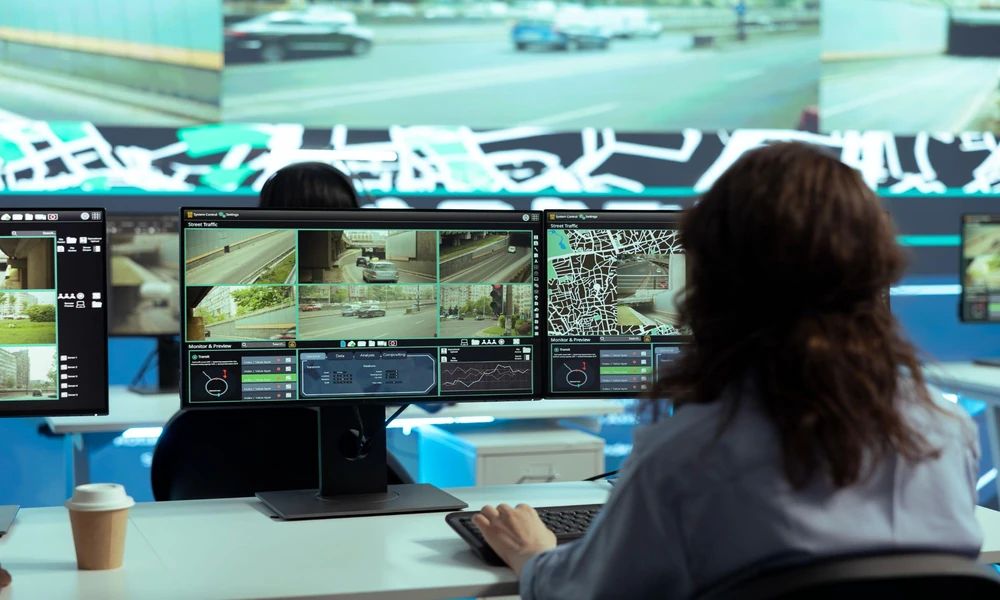

A security system built for a quiet office won’t necessarily hold up in a busy warehouse, and the same goes for an industrial site with entirely different risks. A well-rounded security systems engineering course typically covers how design priorities shift substantially depending on the type of environment being protected.
Security Considerations Specific to Office Environments
Offices tend to prioritise controlled access and monitoring of people movement over large-scale physical risks.
- Access control systems focused on managing employee, visitor and after-hours entry.
- Camera placement concentrated around entrances, reception areas and shared spaces rather than throughout every room.
- Emphasis on data and equipment security, given the concentration of computers and sensitive information.
Security Considerations Specific to Warehouses
Warehouses introduce different priorities, largely shaped by inventory movement and a more open physical layout.
- Coverage of loading docks and large open floor areas where inventory theft or damage is a bigger concern.
- Access control that manages a wider range of personnel, including delivery staff and third-party contractors.
- Systems designed to monitor high-value storage zones separately from general warehouse floor activity.
Security Considerations Specific to Industrial Sites
Industrial sites often carry additional layers of risk related to safety, equipment and restricted zones.
- Monitoring of hazardous or restricted areas where unauthorised access poses safety risks, not just security ones.
- Durable, weather-resistant equipment suited to outdoor or harsh operating conditions.
- Integration with safety systems, such as alarms tied to equipment malfunction or restricted-zone breaches.
Comparing Design Priorities Across the Three Settings
| Setting | Primary Focus | Distinct Design Need |
|---|---|---|
| Office | Access control and people monitoring | Coverage of entrances and shared spaces |
| Warehouse | Inventory protection and movement tracking | Wide floor coverage and loading dock monitoring |
| Industrial site | Safety and restricted-zone control | Weather-resistant equipment, safety system integration |
This comparison reflects general tendencies, since specific site layouts and risk profiles can shift these priorities further.
How These Differences Shape Camera and Access Control Choices
These varying priorities directly influence the specific equipment and configuration chosen for each environment. An office might rely heavily on interior cameras and card-based access control, while a warehouse often needs wider-angle coverage paired with more flexible access permissions for a larger and more varied workforce. Industrial sites, meanwhile, frequently require ruggedised equipment capable of withstanding dust, moisture or temperature extremes that indoor systems were never designed to handle.
Practical Factors That Influence Final Design Decisions
Beyond the general environment type, a few additional factors shape how a security system actually gets designed for a specific site.
- The site’s overall layout, including how many entry and exit points need to be monitored or controlled.
- The volume and type of foot or vehicle traffic passing through the site on a typical day.
- Existing infrastructure, since retrofitting a system often differs significantly from designing one for a new build.
- Budget constraints, which can influence the balance between camera coverage, access control sophistication and monitoring staff.
Common Design Mistakes Across These Environments
A few recurring mistakes show up regardless of setting, usually stemming from applying a one-size-fits-all approach.
- Installing office-grade equipment in warehouse or industrial settings, where it wears down faster than expected.
- Underestimating the number of access points that need monitoring in larger warehouses or industrial layouts.
- Overlooking integration between security and safety systems on industrial sites, treating them as entirely separate concerns.
- Failing to reassess system design after a site’s layout or usage changes significantly over time.
Offices, warehouses and industrial sites each call for distinctly different security priorities, from access control and people monitoring in offices, to inventory protection in warehouses, to safety and restricted-zone control on industrial sites. Recognising these differences, often covered in depth through a structured CCTV system security course, is central to designing a system that actually addresses the risks specific to each type of environment rather than applying a generic approach everywhere.
Wondering whether your current security setup actually fits your type of site? Engage with us to review your specific layout and risk profile.
